Home / Guides / Rules and fines
Road Markings in Turkey: Solid, Broken and Double Lines
Updated 13 November 2026 · 7 min read · testcim editorial team
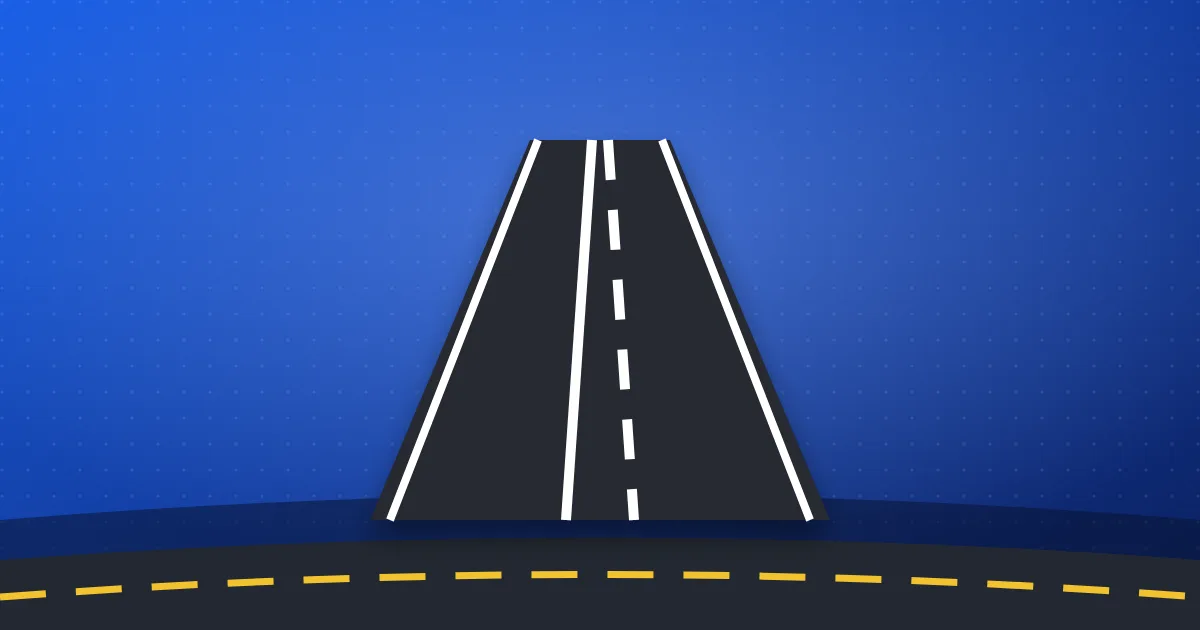
Road markings are horizontal signs painted on the asphalt and are as binding as signs. A solid line may not be crossed for any reason, a broken line may be crossed provided the rules are followed, and two solid lines side by side ban entering the part reserved for the opposite direction.
What Do Road Markings Mean and Why Do They Matter?
Road markings are horizontal traffic signs painted on the road that divide the carriageway into lanes so vehicles travel in an orderly and safe way.
Article 10 of the Regulation on Traffic Signs (Trafik İşaretleri Hakkında Yönetmelik) describes road lines this way: lines that divide the carriageway into lanes and enable vehicles to move in an orderly and safe way. The same article lists the lines one by one: solid, broken, broken and solid, two solid lines side by side, parking space lines, pedestrian crossing lines, writing and marks, and no-parking lines. Lines do not replace signs but complete them, so a driver must look at both the sign and the road. In the exam, questions about lines usually come down to this: can I cross this line? The answer depends on the type of line and on which side of your vehicle it is. Arrows and writing that show direction are also in the road marking family, so an arrow on the road is also a sign you must obey. If you get caught out more by horizontal markings than by signs, studying together with the grouping on the road signs page will make it easier.
- Solid road line
- Broken road line
- Broken and solid road line (side by side)
- Two solid road lines side by side
- Parking space lines
- Pedestrian crossing lines
- Writing and marks (arrows, direction writing)
- No-parking lines
Can You Cross a Solid Line?
No, you may not move to the left lane for any reason along a solid line, and you may not drive over the line.
The Regulation bans this line in one sentence: along the line you may not move to the left lane for any reason and may not drive over it. So even putting a wheel over the line is against the rule. The line cannot be used for overtaking; for overtaking you need a section with a broken line. An obstacle on the road, a slow vehicle or congestion is not a reason to cross the line, because the text has no exceptions. The KGM standard explains the same logic: a longitudinal solid line tells vehicles that they must not cross this line. If you want to see the overtaking rules in detail, we have our overtaking rules guide.
Get ready to pass first time
Premium gives you everything you need to walk into the exam confident:
- All of our 1,000+ questions in English, with explanations
- Full mock exams: 50 questions, 45 minutes, just like the real thing
- Practise by subject and focus on your weak spots
- Mistakes notebook, progress chart and no ads
One-time payment: 249.90 TL · valid for 1 year. A resit costs 1,250 TL.
What Do a Broken Line and a Broken-and-Solid Line Mean?
A broken line may be crossed provided the traffic rules are followed; if a broken and a solid line are side by side, the meaning of the line nearer to your vehicle applies.
A broken line shows that changing lanes or overtaking is possible, but this is a possibility, not a permission. Oncoming vehicles, the distance in front and behind, visibility and speed are still your responsibility. The Regulation says that where a broken and a solid line are used together, the driver should take the meaning of the line nearest to their own vehicle. For example, if the line nearer to your lane is solid, you cannot cross; if the line nearer to the driver coming from the opposite direction is broken, that driver may cross, provided the rules are met. The KGM Highway Traffic Marking Standards also say the same: when a solid and a broken line are together, crossing is made only from the side of the broken line. According to the standard, the broken line separating lanes on roads outside built-up areas is drawn with a 4.50 m stroke and a 7.50 m gap. Before looking at these lines one by one at junctions, you also need to know the rules of right of way at junctions.
Crossing by type of line
| Line | What can you do? |
|---|---|
| Solid line | You may not move to the left lane for any reason and may not drive over it |
| Broken line | You may cross it, following the rules |
| Broken + solid line | The line nearer to you applies |
| Two solid lines side by side | You may not enter the part reserved for the opposite direction |
What Does a Double Line (Two Solid Lines Side by Side) Mean?
Two solid lines side by side turn the carriageway into a divided road and ban entering the part reserved for oncoming traffic.
The Regulation defines this line as a divider, that is, it effectively separates the two directions from each other. The space between the two lines does not count as a lane for the opposite direction; you can think of it as a physical barrier on the road. In the KGM standard, crossing is banned from both sides for two parallel solid lines. When you see this line, you should give up any thought of overtaking completely. In the exam a double line can be confused with a single solid line; crossing is banned for both, but a double line also separates the part reserved for the opposite direction. For overtaking the vehicle in front and for signs together with the lines, you can also look at the no overtaking sign page.
What Do Pedestrian Crossing, Hatched Area and No-Parking Lines Show?
Pedestrian crossing lines show where pedestrians cross safely, no-parking lines show where you may not park, and hatched areas show closed areas you must not enter.
In the Regulation, pedestrian crossing lines are defined as lines drawn across the carriageway so that pedestrians can cross safely. Your duty is to slow down when you see a pedestrian and give way along the crossing, and the sign is complementary: you can look at the pedestrian crossing sign and school crossing sign pages. No-parking lines appear in the Regulation as lines drawn on kerbstones. According to the KGM standard, zigzag lines are used to mark no-parking zones, and yellow paint may be used. Hatched areas (offset hatching) are closed areas, and the standard uses them in places such as turning islands, lane narrowings and transitions to a divided road. A yellow box (junction hatching), on the other hand, can be used at junctions with lights to show drivers that entering the junction is banned. The stop line at junctions is also regulated in a separate section of the standard, and where there is a stop sign you should pay attention to this line.
- Lane and pedestrian crossing lines are white, and may be yellow where necessary.
- Writing, marks and no-parking lines may be white, yellow or red.
- A zigzag line is used to mark a no-parking zone.
- A yellow box may be used to show a ban on entering the junction.
FAQ
Is the yellow line or the white line valid?
Colour alone does not change the meaning of a line; the type of the line is what counts. According to the Regulation, lane and pedestrian crossing lines are white and yellow is also used where necessary; writing, marks and no-parking lines may be white, yellow or red.
What happens if I cross a solid line?
Crossing a solid line is against the regulation and carries an administrative sanction. For current amounts, see the traffic fines page.
Does a broken line always give permission to overtake?
No, a broken line only shows that crossing is possible if the rules are followed. If oncoming vehicles, visibility and speed are not suitable, you cannot overtake.
In which test can I study road markings?
Horizontal markings come up in the exam in the traffic and environment group. You can practise with the traffic questions and the road signs test.
Sources: Regulation on Traffic Signs (KGM), Article 10 Road Lines · KGM Highway Traffic Marking Standards · Highway Traffic Law No. 2918. Rules and fees can change; check the official sources for the latest information.